
AIM introduced a Plastic Bag Ban Policy on January 1, 2026 that prohibits all market participants from distributing single use plastic bags. Our Zero Waste fellows spent three months conducting research and gathering feedback to inform the development of the policy. After presenting their findings to AIM’s Board of Directors, the Plastic Bag Ban unanimously passed.
The policy is currently in its “soft launch” phase. We’ve been working over the last six weeks to educate our market participants about the new policy and how to shift their practices. The ban will be fully in effect and enforced beginning April 2026.
Why is AIM banning plastic bags at its farmers markets?
Plastic bags do not break down. In California alone, over 500 million plastic bags are used every month for an average of 15 minutes each before getting discarded. Most plastic waste eventually ends up in waterways and the soil, polluting our air, water, and soil with toxic chemicals. So we’re phasing them out of all nine of our farmers markets. Addressing the environmental effects of plastic bag usage is one step towards our mission of an Earth-friendly local food and agricultural system.
How is the policy being implemented and enforced?
The policy will be in a soft launch phase from January through March of 2026. During this transition phase, the policy strongly encourages market participants to refrain from distributing plastic bags. Market participants can distribute their existing stock of plastic bags, but should refrain from purchasing more. We are asking them to restock with paper bags or other reusable or recyclable bags.
The Zero Waste team at AIM is offering both in-person and virtual technical assistance to aid in the transition. They can help vendors identify affordable bag options, bulk purchasing opportunities, and best practices. Market participants can request technical assistance here.
The ban will be fully enforced in April 2026. Market participants found out of compliance will be offered assistance to align with the new policy.
Will any bags be available at the market, or do I need to bring my own?
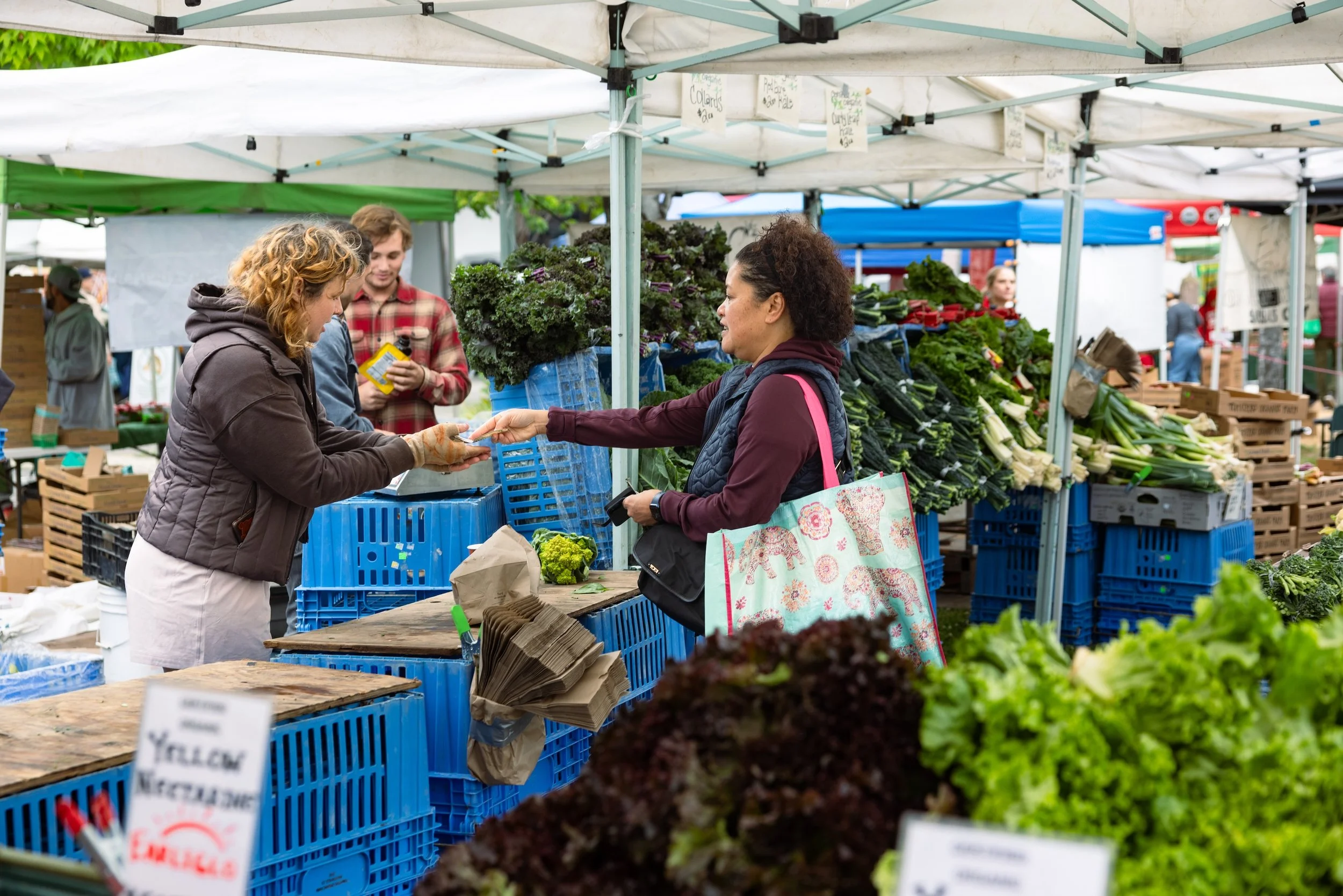
Bringing your own reusable bags is always our first recommendation to cut down on waste and reduce costs for your farmers and food makers. Some vendors may offer paper or compostable bags, but availability may vary. AIM is not requiring bag fees, but this may depend on the producer as alternatives can be pricier. Market participants can still provide reusable, recyclable, or compostable bag such as:
Recycled paper bags
Reusable cloth, canvas, muslin, or mesh bags
Compostable paper bags waxed with natural, PFAS‑free coatings (ex. 100% carnauba wax, beeswax, or natural shellac)
Plastic bags, including bioplastics, compostable plastics, and plant‑based plastics, are not allowed. Bioplastics do not break down in Marin and Alameda county composting facilities. We’re banning them across all three of the counties we serve to maintain consistency.
Meat, poultry, and seafood vendors will still be allowed to use plastic bags for food safety. Plastic bags used for off‑site packaging or transportation are also exempt.
You can also participate in our “bring a bag, take a bag” initiative. Head over to the market Information Booth to donate your excess bags or grab one if you forget yours.
This is great, but I feel like I’m still going to forget my bags.
We get it, it can be hard to break old habits. Some tips to help you transition:
Keep your bags near the door, or in your car.
Move your bags to your door or car as the last step of your grocery unloading process.
Store smaller plastic and paper bags in larger tote bags.
Reuse bags you already own or from other packages/purposes. Buying all new often creates more waste rather than reducing it.
Introducing a little friction into our lives can feel counterintuitive, but the long term impacts can be huge. Tweaking your patterns just a little can make a big difference in waste created, vendor costs, and overall community. Our impacts are amplified working together. Support your farmers and food makers during this transition, spread the word, and pack your bags!
Visit our Minimal Waste Initiaves page to learn more about our environmental initiatives or peruse the full Plastic Bag Ban Policy.