
How Farmers Markets Shaped the Cowgirl Creamery Story
Peggy Smith started Cowgirl Creamery as a celebration of the North Bay’s agriculture. But the support of the community is the real secret to the brand’s success–and the future of our food systems.
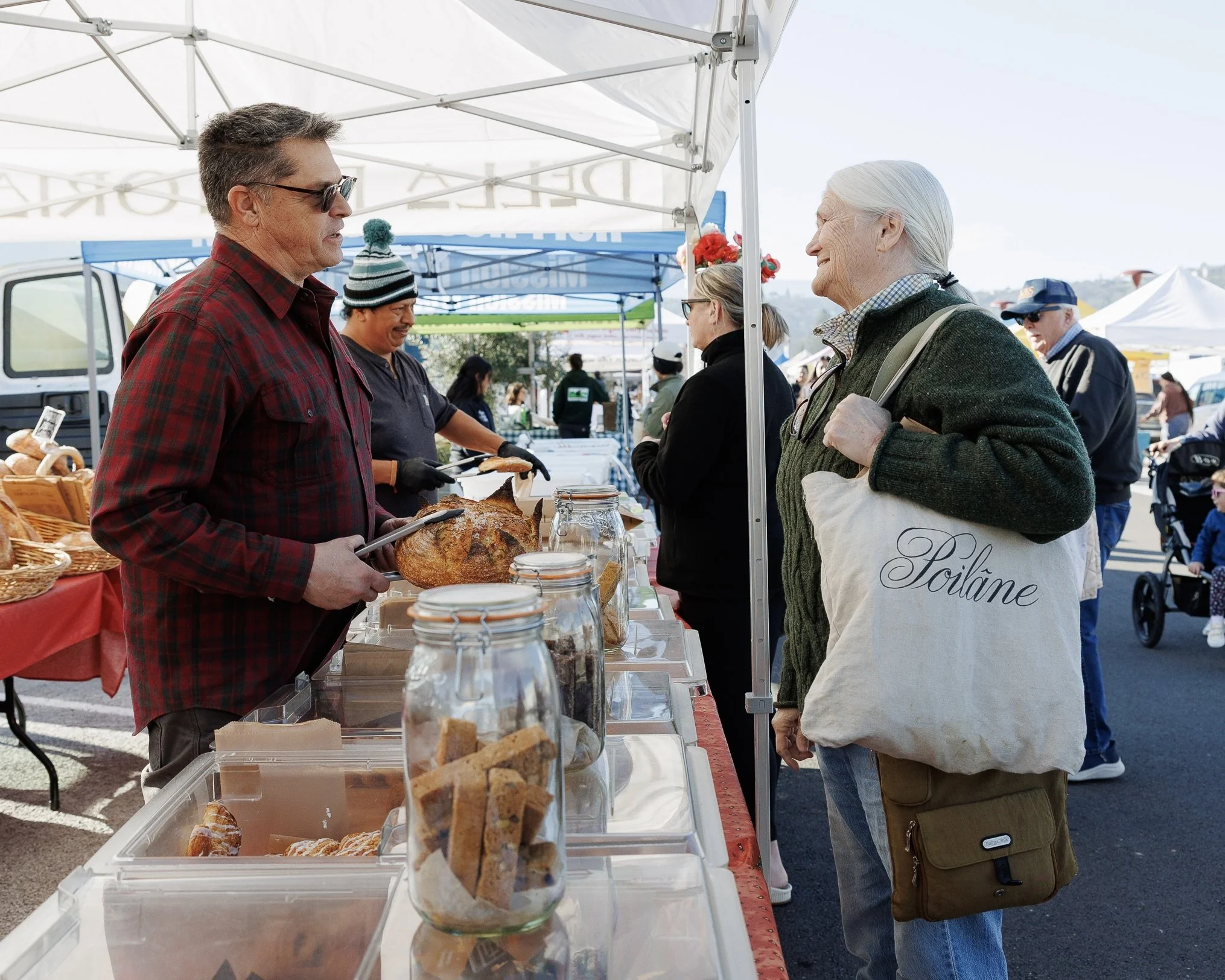
In the early 90s, Peggy Smith had been cooking at Chez Panisse for 17 years. She was cooking, yes. But working with Alice Waters, the pioneer of “farm-to-table,” Peggy was also building relationships with local producers and getting to know their products intimately. She wanted to use this hands-on education to promote local, organic agriculture. She partnered up with her friend Sue Conley, former owner of Bette’s Oceanview Diner, to start something new. They knew their decades of experience at two iconic Berkeley restaurants was worth something. Their expertise and passion eventually became the celebrated cheese company Cowgirl Creamery.
Growing an Idea Into an Institution
Like many businesses, one of their first hurdles was money. “Financing was very difficult, and I think it’s just as difficult today,” Peggy says. They found themselves being reduced by potential lenders to “two unmarried women” and were unable to get financing. Without access to traditional business assistance, they leaned heavily on their food and agriculture connections for advice and guidance. Thanks to the insight and support from businesses like Straus Family Creamery, they were slowly able to build Cowgirl Creamery.
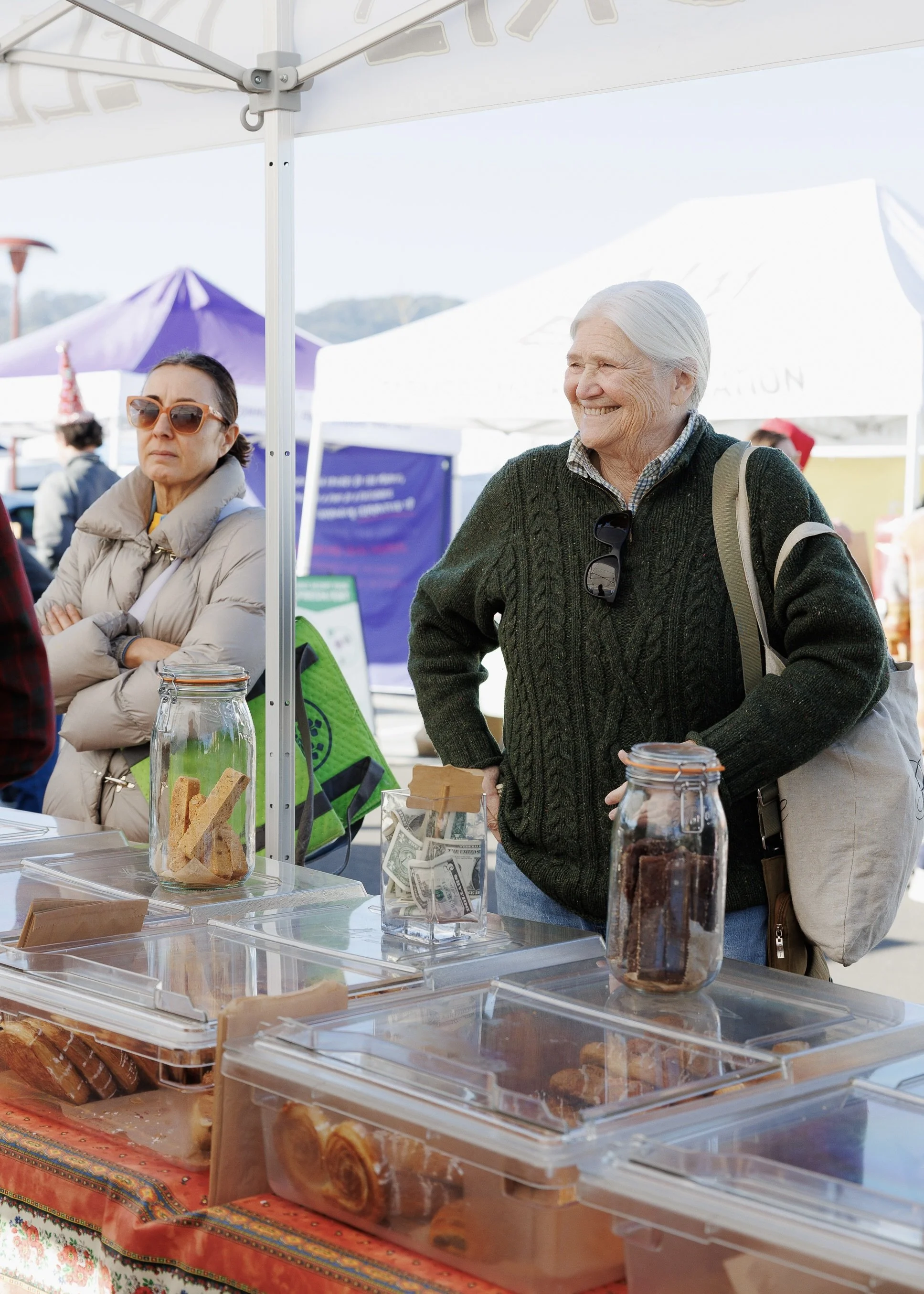
Farmers markets were the ideal sales outlet for their small, emerging business. Their early days at market provided opportunity for constant feedback from both customers and other business owners who had already been in their spot.
“Farmers markets are invaluable in getting your business up and going,” Peggy says. Learning from other businesses helped them reduce roadblocks to speed bumps. It was a place of support, not competition. Exactly what you need when starting out.
Farmers markets also offered unique marketing opportunities. They provided opportunity for real-time feedback and organic moments of education. Sharing samples was both product education and brand awareness. Being able to share their product helped shoppers not only decide which cheese they wanted to buy, but understand that they wanted any in the first place. “If people don't try it, they may just pass it by and think, ‘Well, I don't need any cheese,’” Peggy explains. “But if they stop and taste the cheese, they think, ‘Wow, I really need this cheese.’”
This taught them early on to keep their minds open to what their business could be. Input from the farmers market community helped them hone their product and business approach. Even as their business changed shape in those early days, they knew they’d be successful if they stuck with their initial philosophy: work with local, organic products and keep their team happy.
Building Community at AIM’s Center for Food and Agriculture
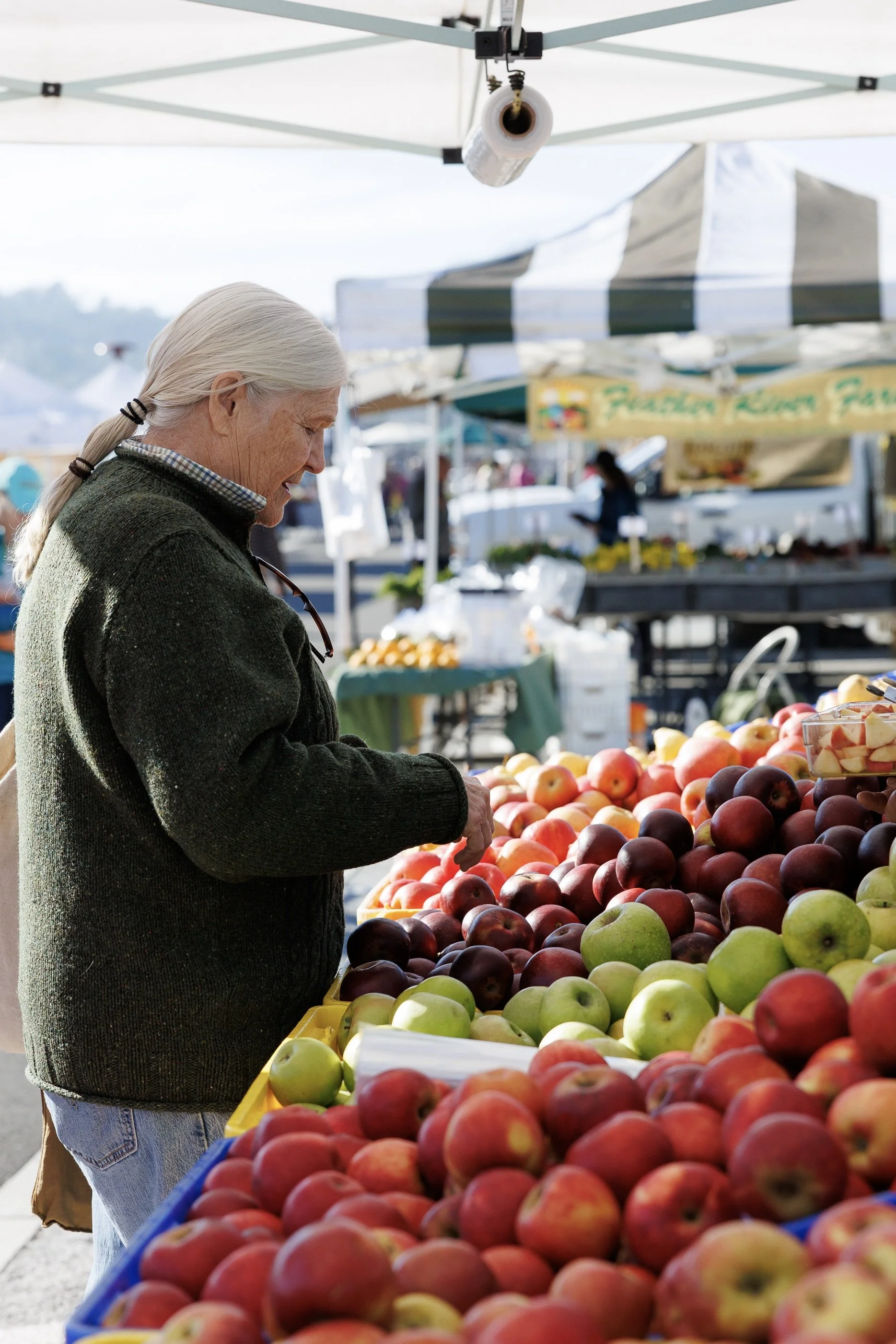
Peggy and Sue built Cowgirl Creamery into a legacy brand. They sold the business in 2016, and Peggy continues to champion small food and farm businesses. She has been involved with AIM for over 20 years and is currently the chair of the board of directors. Peggy has been instrumental in our efforts to get AIM’s Center for Food and Agriculture off the ground. This is in no small part because of her experiences as a food business owner.
Peggy’s indispensable network of support isn’t the baseline for many new food and farm business owners. “It's hard to do anything well by yourself,” Peggy says. “A community center for agriculture will really help people who have questions connect with others who have answers.” The Center for Food and Agriculture won’t just be a place for commerce, but community and connection for vendors and shoppers alike.
Phase One: Permanent Farmers Market
AIM’s Marin markets have been community spaces for over 40 years. While the heart is always there, the transient nature of setting markets up in parking lots leaves significant room for improvement. Phase One is constructing a new home for the Marin farmers markets. It will address modern business needs, market experiences, and climate concerns. We’ve prioritized infrastructure features for our farm and food businesses such as:
Space for up to 220 market participants
Power access
Tent tie-downs
Dry and cold storage
With these improvements, market participants no longer need to worry about things like generators and buckets of concrete to anchor their tents. This reduces costs and allows business owners to focus on their product–not market logistics. Market day can center the customer.
The overall Marin farmers market experience will also be improved with:
Site grading to create a level market addressing sea-level rise and accessibility
Permeable pavers that will drain 98% of rainwater without curbs
Permanent ADA-accessible restrooms
Shade and rain protection areas
Shaded seating
Hydration stations
EV charging and bicycle parking
Increased chef parking and carts
WiFi
Digital kiosks
Phase One of construction at the CFA will break ground in October of 2026, with a slated opening of Summer 2027. Phase Two will follow. This space is a physical embodiment of AIM’s mission and the Cowgirl Creamery ethos of lifting up community. Farmers markets are centered around the food. But it’s you, the community that is the foundation of bettering our farm and food systems. Entrepreneurial success stories like Peggy’s inform the business of tomorrow. And she’ll be the first one to tell you, “We couldn't have gotten anywhere without the team that we had–remarkable people.”
—
Interested in more information, being a part of campaign priorities, or leadership giving? Please read more at www.centerforfoodandagriculture.org or contact Jasson Minadakis, Director of Development, at jasson@agriculturalinstitute.org or 415-520-8173.