
Zero Waste Initiative
Contributing to the improvement of local and regional ecosystems.
Community Education and Outreach
The Zero Waste team tables at markets and events to educate market vendors, shoppers, and volunteers. They share tips on sustainable waste practices, food waste reduction, and reusable foodware solutions.
Plastic Bag Ban
The Plastic Bag Ban is new to AIM for 2026. It is part of AIM’s initiative to work towards an environmentally beneficial food system. Our Zero Waste team is providing training and managing enforcement to ensure success for all market participants.
AIM is partnering with food recovery organizations to create a system that would allow for easy post-market donations.
The team is also considering composting initiatives for the future.
Food Recovery and Organic Waste Diversion
Plastic Bag Ban
The Plastic Bag Ban aims to address the adverse environmental effects of plastic bag usage at AIM’s farmers markets. Banning plastic bags distribution at our markets aligns with our mission for an earth-friendly food system.
The Plastic Bag Ban prohibits all market participants from distributing single use plastic bags of any kind at all nine AIM farmers markets. This includes bags made from plastic and bioplastic regardless of labeling or certification. If market participants choose to provide bags to customers, they must be reusable, compostable, or recyclable, such as paper or canvas.
The policy will be in a soft launch phase from January to March of 2026 to allow for market participants to transition. During this phase, the policy strongly encourages market participants to refrain from distributing plastic bags. Market participants should refrain from purchasing more plastic bags and instead restock with paper bags or other reusable or recyclable bags. The ban will be in full effect April 2026.
The Zero Waste team at AIM is offering both in-person and virtual technical assistance for market participants to help find a pathway towards compliance.
Market participants can request technical assistance here.
FAQs
-
If you provide bags, they must be reusable, recyclable, or compostable, such as:
Recycled paper bags
Reusable cloth, canvas, muslin, or mesh bags
Compostable paper bags waxed with natural, PFAS‑free coatings (ex. 100% carnauba wax, beeswax, or natural shellac)
Plastic bags, including bioplastics, compostable plastics, and plant‑based plastics, are not allowed.
-
Bioplastics are not accepted in compost streams in Marin and Alameda County as they do not break down in most commercial composting facilities. To maintain consistency across all AIM markets, all plastics and bioplastic bags are prohibited.
-
Yes. Plastic bags are allowed when required for food safety and regulatory compliance, including for meat, poultry, and seafood vendors. Plastic bags used for off‑site packaging or transportation are also exempt.
-
AIM recognizes concerns about moisture and freshness. Breathable reusable bags (mesh or muslin) and naturally waxed paper bags can work well for many products. AIM will share food storage tips with customers to help maintain freshness without plastic and avoid food waste.
-
No. AIM does not require vendors to charge for bags. Vendors may choose whether to charge a fee to offset costs and encourage reuse.
-
AIM’s Zero Waste team can help vendors identify affordable bag options, bulk purchasing opportunities, and best practices. Request technical assistance here.
Market participants found out of compliance after April 2026 will be offered technical assistance to help identify a pathway toward compliance.
For Market Participants
-
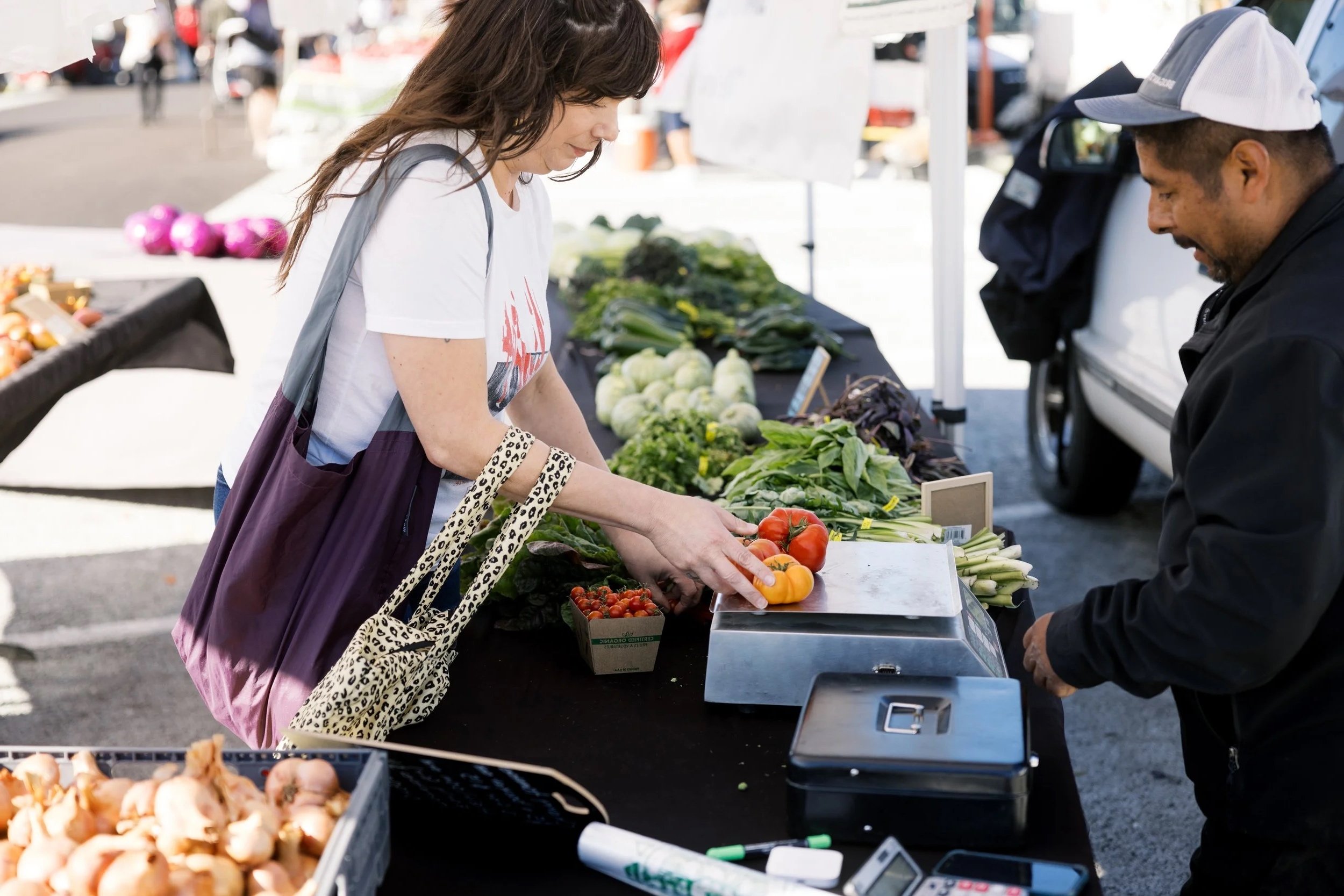
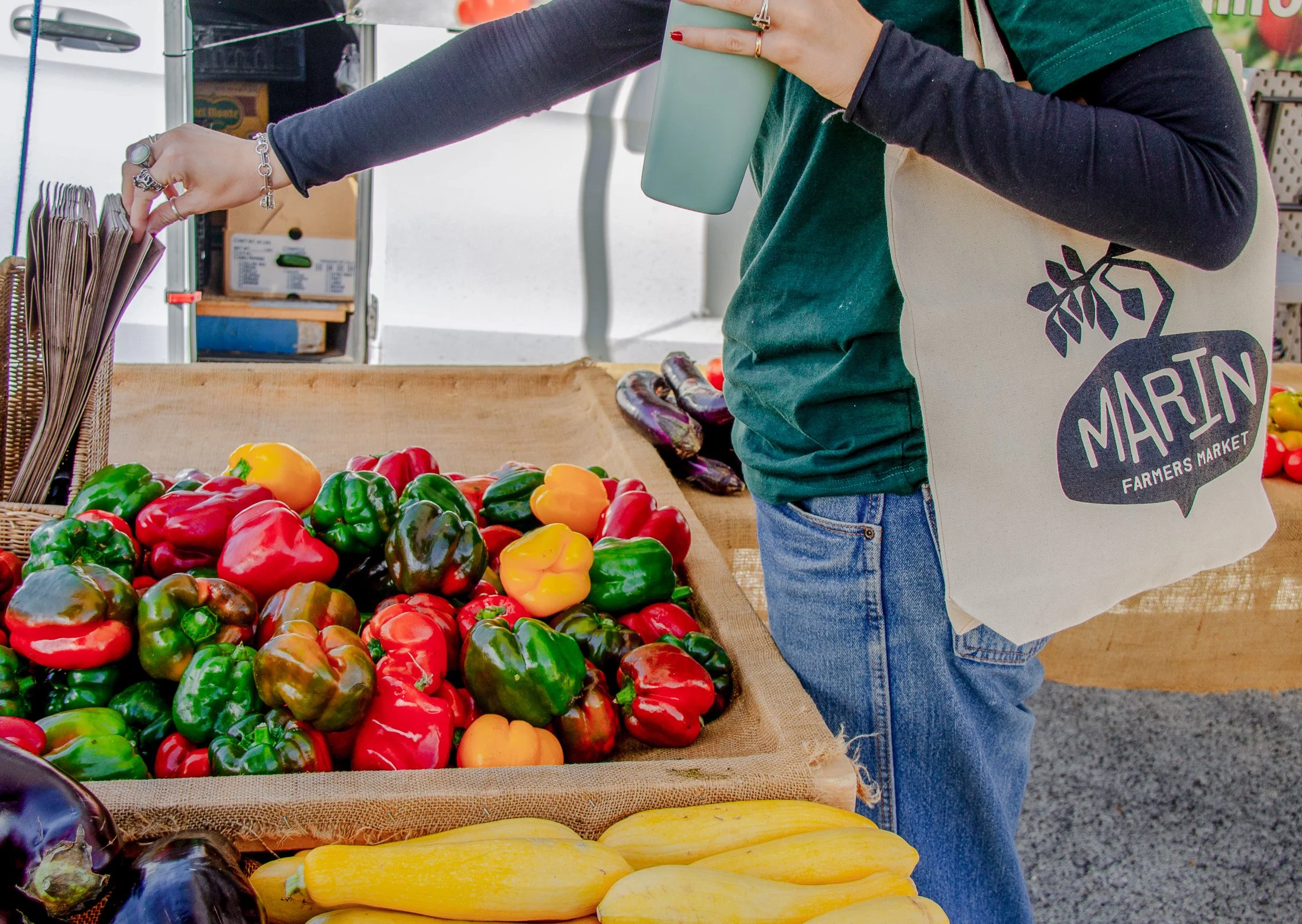
Shoppers are not limited on the types of bags they can bring to market. We encourage cloth totes, mesh produce bags, and muslin bags versus single use plastic.
-
Some vendors may offer paper or compostable bags, but availability may vary. Please keep in mind that plastic bag alternatives can be more expensive for your farmers to provide. Bringing your own bags is the best way to support them and to be prepared.
You can also head to the Information Booth to participate in our “bring a bag, take a bag” initiative; donate your excess tote bags and grab one when you forget!
-
AIM does not require market participants to charge for bags. However, vendors may choose to charge to offset the cost of the more expensive plastic alternatives.
-
Yes. Meat and seafood vendors may still use plastic bags for food safety.
-
Bring reusable bags, containers, and produce bags.
Create zero waste habits, such as keeping bags in your car or near your door.
Keep plastic and paper bags you already have in your canvas tote bags.
Bring a cooler and ice packs for meat and seafood.
Reuse bags you already own before repurchasing new.
Support market participants during the transition and help spread the word.